icon caret-left icon caret-right instagram pinterest linkedin facebook x goodreads bluesky threads tiktok question-circle facebook circle twitter circle linkedin circle instagram circle goodreads circle pinterest circle

Conversazione

Vegana Italiana: Bringing Pura Vita to Your Kitchen

Set on West Hollywood's hip and colorful Santa Monica Boulevard, Pura Vita is a beacon for foodies, Italians, and Italophiles alike. Its low-lit, cozy, contemporary New York City wine bar vibe is as inviting as the food, which is both innovative and delicious.

Start with arancini or eggplant parmigiana, before digging into cacio e pepe or spinach and mushroom lasagna, paired with wine sourced from organic and biodynamic farms. Then, treat yourself to the tiramisu. It's a Grand Tour of the boot and its stones, influenced by chef and owner Tara Punzone's Italian New Yorker roots.


Take one look at the restaurant's arresting logo—a chef's knife pierces through a dripping tomato—and it's suddenly clear: no animals were harmed in the making of your meal. In fact, it was the first 100% plant-based Italian restaurant and wine bar in the United States when it opened its doors in 2018. That doesn't stop Pura Vita's largely omnivorous customer base from coveting reservations for brunch, lunch, aperitivo, and dinner.


Drawing from the Costa Rican phrase "pura vida," Tara called her restaurant Pura Vita to reflect an Italian version of the pure life. It's also among her many tattoos. She designed the concept, menu, and interior herself, drawing from her master's degree in fine arts from the School of Visual Arts in New York City. 

Born in Brooklyn to second-generation Italian American parents, Tara grew up in Long Island, influenced by her grandparents' Neapolitan and Calabrian traditions. But after watching a video about slaughterhouses in her fifth-grade class, she found herself rethinking her culture's foods, especially once she became vegan at age 12.

Mom's lasagna was no longer an option, but Tara took to the kitchen, reinventing her favorite family foods in a way that celebrated their rich history.


She documents that journey from plant-based dinners at Manhattan's Angelica Kitchen to opening Pura Vita and releasing her first cookbook, Vegana Italiana (Rodale Books, October 2025), which she co-wrote with Gene Stone. She was also kind enough to share more about navigating that path, from the spark that ignited her Pura Vita vision to her ultimate goal of serving and sharing beautiful, compassionate Italian food. 

Pura Vita Chef and Owner Tara Punzone
Photo by Heidi Calvert


What led you to embrace veganism?

I write about it in the book because it's part of my whole experience that got me here to where I am today. As a kid, I loved animals. Every little kid does, and I was always very finicky about the things that I would eat. But of course, as a child, you don't make the connection to how the food gets on your plate, what the process is from a beautiful doe-eyed cow standing there to a dish that's in front of you. It doesn't occur to you what goes on from one place to the other. So there was no connection for me.

But then in the fifth grade, when I was 10 years old, I had a teacher who showed the class a video of a slaughterhouse, and it was just appalling. It affected me in a very, very profound way.


That was it for me. I didn't eat my lunch that day. I gave it away to somebody else. And I told my parents when I went home that night that I didn't want to eat meat anymore. And that was the beginning of it.


How did your family respond?

They were completely perplexed, and I'm sure they thought it was going to fade out after a couple of weeks. I mean, I was 10 years old, but it didn't because I meant it.

Thankfully, I have really amazing, supportive parents. And what happened was my mom said, "OK, well, there's this place, Angelica Kitchen. Let's eat there. Let's make it a positive experience."


She wanted to understand as well. And in front of Angelica, there used to be a little area where all the pamphlets would be from groups like PETA and information about factory farming for people who were interested enough to take it. And I took all of it, and I just went down the spiral of learning about all of the different segments of that industry, and one by one, how revolting it was. And I didn't want to be a part of any of that.


It took me a couple of years to figure out the whole vegan thing. By the time I was about 12, I had given away my leather motorcycle jacket and my Doc Martens, and I was ready to be vegan to make that full commitment. And it was the best. I have zero regrets.


How did that affect the way you participated in Italian traditions?

I'm proud of my heritage. I love my family traditions, and I really wasn't enthusiastic about having to let go of that part. So it became my focus to have both things. I wanted to be able to not eat animals and not hurt animals. But I also wanted to be Italian American and participate in all the things that my family was doing, cooking, and celebrating.


The very first thing that made me realize was that I needed to start learning how to make the foods that my grandma and mom made, particularly for Easter. My mom would always make lasagna on Easter, and I couldn't have it.


My mom made meat-free lasagna because, for many years, I was still eating dairy, and I still was able to participate. But then one day I realized, "No, now I can't have any of it at all."

And so I started trying to figure out how to make the lasagna. That's where my spark started flying. It was terrible at first. It was just a big fail on the first of many times that I made it. But that's what got me excited to figure these things out. That was the first dish.


Tara draws inspiration from family recipes and traditions. 

How did that spark lead to Pura Vita?

I always had the dream of having my own restaurant. You never think it's ever going to happen in real life.


I'd been working in restaurants forever, sharpening my skills and learning about business. When I came to L.A., I was the culinary director for a vegan place that had several locations. So I had the opportunity to learn about business, which is the part of being a chef that you don't necessarily learn. That was extremely helpful for me because I learned all the things not to do, which is sometimes more important than what you're supposed to do.


Then, the original owner sold it to new people, and I decided it was time for me to do my own thing. So I started searching for locations. I found a place that was so fitting in my mind for what I wanted. I fixed it completely, but I wanted it to have a certain feel. I got very lucky with the location. And I was also lucky because I wasn't somebody that people knew.

It was just the absolute right moment in time, in the absolute right place. And I'm so grateful for that. It was a success from the very first night, and thank God we're still there.


"I have an amazing staff and people I really trust, who helped me make things happen," says Tara.

How did Vegana Italiana come about?

I always had the idea in my mind that I wanted to write a book. As soon as I opened the restaurant and it was successful, every single person asked me if I had a book. But I was running a restaurant and there for 16 hours a day every day. You can't write a book like that. It's not possible.


So many years went by of me wanting to do it, and then I just got to a place with the restaurants where I have an amazing staff and people I really trust who helped me make things happen.


It was super difficult because on my one day off, I was just working on this book. If it weren't for Gene Stone, my co-author, I would never have finished it.


Tell us about the writing process.

Luckily, he lives a couple of blocks away from me and from the restaurant. It was very convenient. There was no driving involved. It was pretty great. We would just spend the day together.


I wrote the recipes, but I had to write them for smaller servings. But the stories about my life and my childhood—all the recipes have little anecdotes or little stories to go with them—that was me just recording an idea on my phone.


I would just tell the story—for example, Easter lasagna—into my phone and then just send it to him, and he would transcribe my words and then make it a little bit more cohesive. That was fun because it felt free. I was just speaking it out, and he was making it readable. We were a really good team.


How did you select the recipes you share?

I wanted this book to be accessible. People who live in L.A. come to the restaurant every day and get to eat my food. That's great because that's the whole purpose I want to share with my community. But so many people can't get here, and I want it to be accessible to those people. So you can't have recipes with wild ingredients that no one can find.


So I immediately eliminated anything that included ingredients like that. For example, truffles. It's not easy to get truffles; they're extremely expensive. They're delicious, but that's not what this book is about.


I want people to be able to make food for their family—really good old school Italian food that happens to be vegan, whether you're fully vegan, you would like to be fully vegan, you haven't figured out a way to do so yet, or you're just trying to add more plant-based food into your life.

A lot of the recipes are things my family has always eaten, and it turns out a lot of those things were already vegan. For example, in Calabria, it's peasant food: Swiss chard, beans, potatoes, and peppers.


Cheers to healthy, plant-based Italian food.

With your restaurant and this book, what is your ultimate goal?

It's always been the same. My grandpa and grandma owned an Italian hero shop in Brooklyn. When I was a kid, I wanted to be my grandpa so much. All he did was make simple food for the community, but it was so wildly popular that they needed to hire a security guard. And I thought that was so cool: the impact that he had on his community, and that's always been my goal: to replicate that in a plant-based way.


Providing that community feeling and support, and making people happy through clean, healthy food, has always been my goal. It's very simple. I just love the idea of making people happy through food.


If you enjoyed this article, consider subscribing to my newsletter for more content and updates!

She Built a Brooklyn Foodie Bookstore Inspired by Sicilian Roots

From a young age, Brooklynite Paige Lipari yearned for a space where she could bring together her passions for food, books, and the arts. As she grew older, she realized she also wanted to share what she loved with her community.


Following a trip to her family's home in Alcamo, Sicily, Paige decided that the space would be a bookstore catering to gourmands by selling Sicilian and Italian specialty goods alongside cookbooks and serving as an event space for foodies and neighbors in Greenpoint, Brooklyn. And so began Archestratus Books + Foods in 2015.


I recently sat down with Paige, who shared more about Archestratus's start, her deep connection to Sicily, the challenges and rewards of running a niche business, how she has engaged the community, and more.


Tell us about your connection to Sicily.

I'm Sicilian on both sides. My father was born in Sicily, and my mother is second-generation American. I have a very strong connection with my Sicilian heritage. We go to Sicily every few years and visit my family in Alcamo.


My family has a city house and a country house because it was four hours to Trapani by donkey, but now it's seven minutes. They're in the city house in the winter, and then they go to the country house for the warmer months, where they have vineyards. They grow grapes, and they sell mosto to winemakers. 


I actually didn't go to Sicily until I was 19, which felt very late. And then we started going more and more, but my nonna always brought the Old World Italian. I never really related to this sort of gold chain/ white shirt Italian American—that just wasn't in my family. I grew up with a nonna who always had some wine on the table with some fruit and cheese. We always ate raw fennel after every meal.


She was very much into agriculture and would grow things all year long. The food was unique compared to other Italian American restaurants we visited. And she was my first anchor in that culture.
 

Archestratus-interior.png

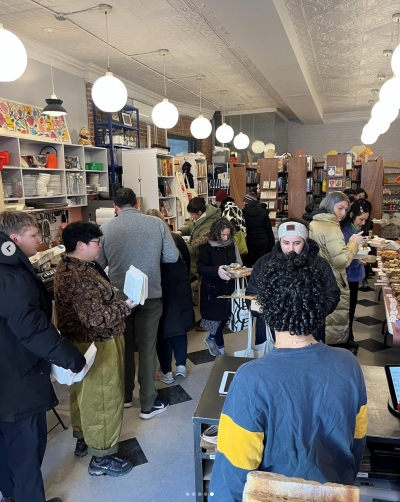
Archestratus specializes in vintage and new cookbooks.

What inspired you to open Archestratus, and what led to the naming of the bookstore?

When I was really young, I loved books, and there was this closet where I would sit and read by myself. And I was a latchkey kid with two working parents, so I started cooking for myself really early.


I kind of knew in the back of my mind that I wanted a bookstore. I also love design and making spaces feel warm and cozy. And then I love the arts, so the idea of having people perform in this space, doing conversations and talks, and keeping that intellectual stimulation.


It wasn't until I went to Sicily for the first time, when I was 19, and met my family, that I completely broke open this obsession with Sicilian food and, of course, Sicilian cookbooks. I fell in love with them, and it changed my life. 


When I came back, it was kind of my way of connecting with them and also preserving my heritage because my nonna was starting to have dementia. The recipes were all in her head.


When I learned about Sicilian cuisine, my creative juices just flowed so hard in that direction. I could never really put my finger on why it was different or what it was about until I went there.


Sicily's so beautiful and unique, and it's amazing to me that now it's getting its flowers as far as how it is its own place. But 20 years ago, when I started out making this food and getting really passionate about it, nobody knew. No one was talking about how it's influenced by Spain and North Africa, and there are a lot of Middle Eastern flavors, and there's the Couscous Festival and all that stuff.


I was passionate about spreading the word.


Where did the name Archestratus come from?

I read Pomp and Sustenance by Mary Taylor Simeti and read about Archestratus, and I immediately felt a connection with him. He was kind of wild in what he wrote, and he was deeply mysterious; we don't know much about him.


I named the store first, and then all these answers revealed themselves later. He was a poet who was more interested in places and simplicity, enjoying himself and having a good time. Food was all about that and gathering.


Cookbooks are documents of places, times, and people. I'm interested in how food is a way of seeing the world and bringing people together.


How do you select the books for your collection, and do you have any personal favorites?

I go to book sales. I love books where it feels like there's a real voice. I know there's a place for more prescriptive things that fill a niche. I just make sure that they're really of good quality and were done with intention. 


Some of my favorite books are Pomp and Sustenance and Honey from a Weed by Patience Gray.


Patience Gray's husband was a sculptor, and they would travel around the Greek and Italian islands in the Mediterranean, chasing marble for him. So she would spend time in these places. While he was doing the work, she would go out and sniff the windows of the homes, figure out what the women were making, and write about them in a strange, esoteric, funny way.
 

Archestratus-Cookbook-Club.png

Can you share some highlights of the community spirit at your bookstore?

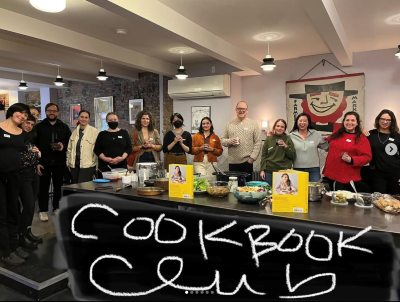
We started the Archestratus Cookbook Club in 2015, and it has always been successful. We pick a book every month, and then everyone shows up with one portion of a dish. Then we all just have this feast, take a little bit of everything, and try other dishes from the book to see if you want to buy it.


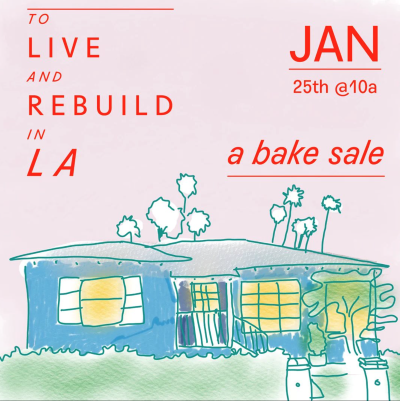
Our bake sales are probably the most incredible. We held a bake sale for the L.A. fires and raised $9,000 in three hours, which was matched by a corporate sponsor. We also held a bake sale for Joe Biden, one for Planned Parenthood, one for Ukraine, and one for Palestine. 


We usually have around 80 bakers, and then it gets people to come. It's such a great model. You spend $20, but then if it's a big sale, that $20 can turn into $200.
 

Archestratus-Bake-Sale.png


What's been your biggest business challenge?

The pandemic was a challenge, but it wasn't my biggest challenge. In a bizarre way, I almost felt like I was ready. I already wanted to expand and had been researching more food vendors.


During the pandemic, we were a bookstore cafe, and I was already starting to think we were outgrowing this space. So, I was already researching vendors for fresh milk and eggs and trying different things. And so I had set up all these connections, and then the pandemic hit, and I was like, well, I could do a grocery pickup.


On March 19, 2020, we did a grocery pickup, which was one of the first weekends. By April, we had one day when we had to pick up for 220 people. They would come up on the street with their order, and then I would fulfill it. So I had this bizarre flow happen with the pandemic, and we were O.K.


My biggest challenge after the pandemic was when we expanded, and then I realized, "I don't like this. I don't want to do this. I don't like having a bigger staff, and I don't like dealing with this landlord."


I thought I would love it, that this was what we needed. But then I realized we needed to be smaller, more flexible, and lighter on our feet.


I did this big thing, saying, "We're doing this." Then, I had to pull back and make that hard decision to contract.


Every decision I make is pretty public, but I was not doing the thing that I know I love. I love making food, and I love cooking, but it was not making me happy anymore at that level. Facing that and just financially getting through that and out of it has been extremely challenging, and I'm still dealing with the effects. 


What are your upcoming plans?

I know that people want recipes, and I want to share them. And so, figuring that out is going to be 2025, and starting to do that. I know there will be a newsletter, so I'm going to start writing one and sharing some of these recipes.


Another more community-driven thing I want to do this year is create a community zine and start making a cookbook with everybody, especially coming out of these bake sales. We have such a network of people who love to develop recipes, cook, and have family recipes. We started doing that before the pandemic, but it never got off the ground. And this is the year I want to make time.


What do you hope people take away from a visit to Archestratus?

I hope that they get inspired to be more of themselves. I hope that they see that we're operating on a frequency of not giving a shit, and I hope that they go off and they do whatever they want to do. 


If you enjoyed this article, consider subscribing to my newsletter for more content and updates!