icon caret-left icon caret-right instagram pinterest linkedin facebook x goodreads bluesky threads tiktok question-circle facebook circle twitter circle linkedin circle instagram circle goodreads circle pinterest circle

Conversazione

How a San Diego Nurse Practitioner Turned Her Passion for Italy into a Boutique Travel Company

Working in tourism was never on Amy Chambers' roadmap. As a student at San Diego State University, she immersed herself in cell and molecular biology, not language or culture.

But a study abroad trip to Florence in her twenties changed everything. What began as a detour became a lifelong passion, leading Amy to spend months at a time in Italy over the past two decades. Along the way, she cultivated deep friendships and a nuanced understanding of the country and its culture.

That love of la dolce vita inspired her to cofound the Scappare Travel Club (from the Italian word for "escape") with fellow Italy enthusiast Maria Goldman, whom she met while studying Italian more than a decade ago. The LLC officially launched in January 2024.

Although she still maintains her career as a nurse practitioner in urgent care, internal medicine, and pediatric psychiatry (negotiating time off for extended stays in Italy), Amy pours equal energy into her business. By design, the company offers intimate, small-group tours that eschew conventional tour operators in favor of a trusted network of local friends, opening doors to sights, foods, and experiences that most travelers never encounter.


Amy discussed the origins of Scappare, the philosophy behind its boutique approach, and why sharing Italy with others has become such a personal calling.


Where did the idea for the Scappare Travel Club come from?

The idea for it started a long time before we formed the actual company. I went to study in my twenties and lived in Florence for a while.


It took a little while for me, but after I assimilated, I felt a sense of home there, not in the same way I feel at home here, but with a sense of belonging. And it opened something in my heart.

I felt a different way there. I developed a deep-standing love for the Italian way of life, and when I left, I felt the need to return. So, I did the next year and kept going back year after year.


I also wanted to learn more about the culture and the language. So, I spent the next 10 years studying Italian and learning Italian. And once I learned the language, I went back even more because, for me, learning the language is like the key that unlocks the door to a whole different culture, way of doing things, and way of looking at things: eating, relating to people, conversing—all of it.


Italy is now a meaningful part of my life, one that I hold dear and cultivate. Starting the Scappare Travel Club came from that. It came from my love affair with Italy. It's nice for me to see that love affair develop in other people, too.


Scappare Travel Club Co-founders Maria Goldman and Amy Chambers enjoy an aperitivo in Pienza, Italy.

How did the business idea become a reality?

I met Maria 12 years ago while studying Italian at the Italian Cultural Center here in San Diego. She was learning Italian at the same pace that I was.

As a nurse practitioner by day, I have been able to spend two to three months a year in Italy, so I've been able to realize my dream of sharing the magic of Italy with other travelers. And people began to want to experience what that was like.


So, Maria and I got together and thought, "What if we could do this formally? Maybe even people who don't think they want to go to Italy could experience its magic—but in a way that's different from typical tourism."


My dear friend Andrea drives us around Tuscany, and our friend Massimo is a nationally licensed tour guide in Sicily from Ragusa. We love to share backdoor experiences with small groups. You eat at restaurants that tour companies don't send you to. You meet our friends, you become friends, too.  


Amy with Local Friends in Montepulciano, Italy


Share the significance of the name Scappare.

It means "to escape" in Italian, and I wanted to name the company after this concept. I wanted the name to be a hybrid of Italian and English, like me.


I'm from California, but I wanted to include Italian words, and I actually received a lot of pushback about that. I heard, "If you name your company with an Italian word, no one's going to know what you are. No one will know what it means. They won't know how to look you up. It's going to be confusing."


I felt that people would be able to relate to the feeling of getting on a plane and escaping their everyday routine. That feeling of escaping and flying away is the best. For me, knowing Italy is on the other end of that destination is a very important and meaningful feeling. Escaping to Italy is my love in life. 


Not that your life here is not important, but escaping to Italy is just the best thing ever. It's the best place on earth, according to me!


So, I wanted to have that feeling front and center in the name of my company.  There's some fun in explaining it to fellow travelers. And when I do, people can relate even though it's not in English.


Amy with her friend Paolo, who leads Florence walking tours for Scappare Travel Club.
 

What does that concept look like in practice?

Our signature trip is the Florence and Tuscany trip, and our Italian friends arrange the ground transportation. We have Paolo, a friend of mine whom I met years ago, who does walking tours of Florence.


Many people organize tours, and they take larger groups than we do. We want to maintain the boutique, small-group experience.

With us, you're traveling with friends. Maria and I (at least one of us) are always there on the trips. We're not necessarily doing all of the activities, but we are there in the background or in the foreground, so that our guests have a familiar face close by.


We like to get to know our guests; we don't just put together a tour and say, "Okay, go have fun." We are there with them.


Many tour companies work with destination management companies in Italy and create packaged tours that they pay for. While we do work with destination management companies (sometimes for the bare bones of the tours), we don't package everything with them. We actually pay extra to use our own people that we know and trust.


Maria and I go on research trips and meet people. We vet every single hotel. We meet tour guides ourselves.

We want people to see the authentic Italy. Not a restaurant that's front and center in the Piazza, where you'll be overcharged or there's a tourist menu, but the restaurant five blocks away, where you might have to walk, but Massimo's friend owns it.


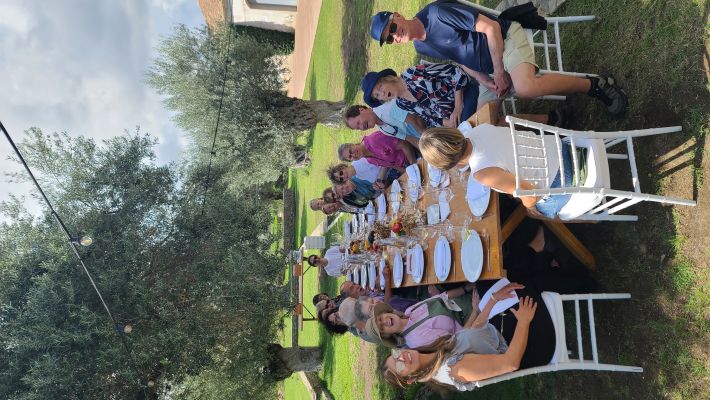
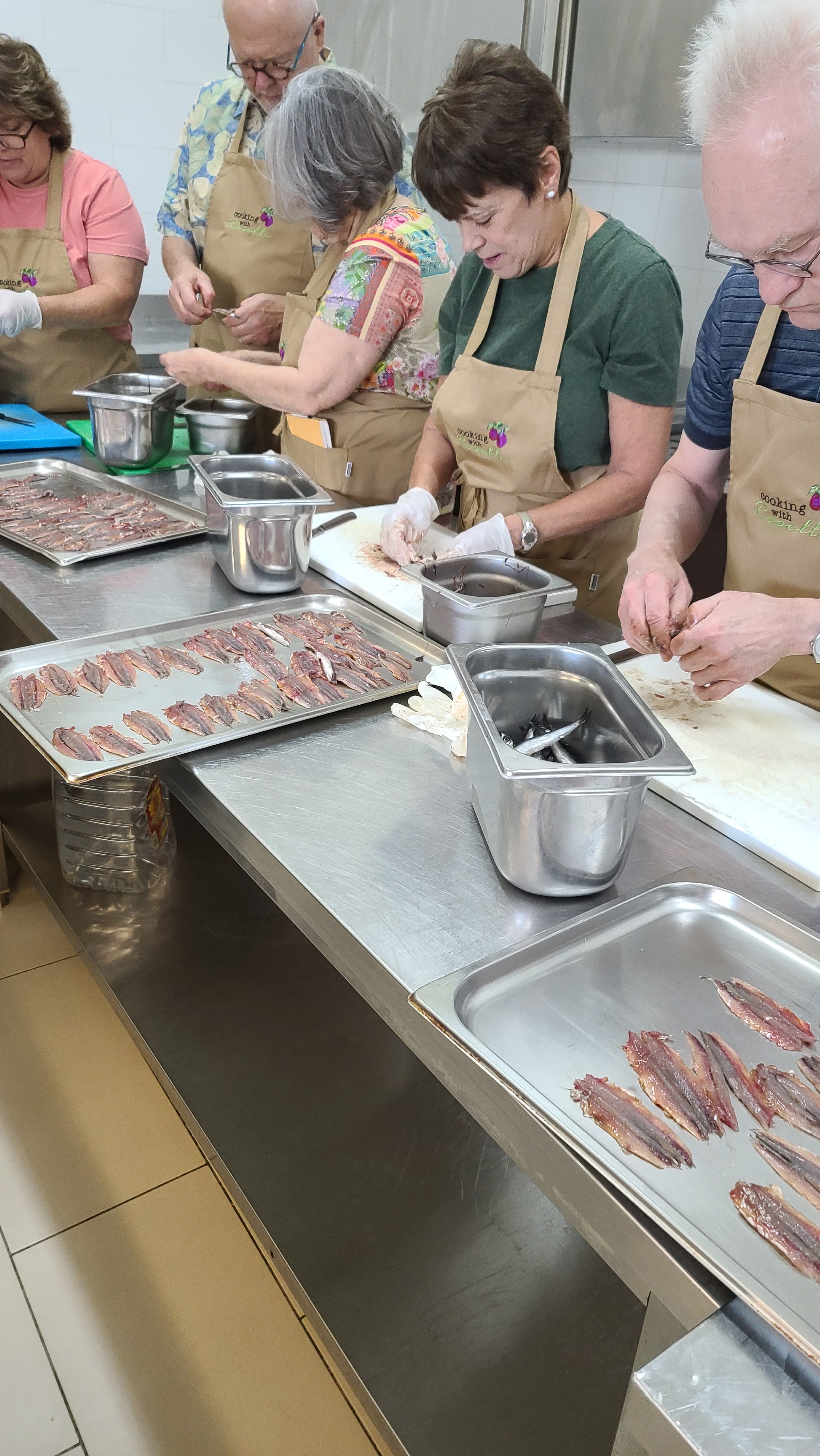
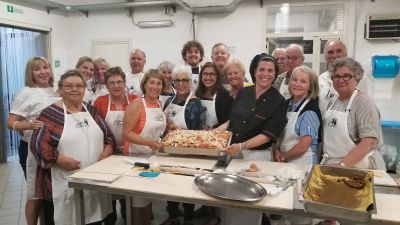
Scappare Travel Club guest Glenn shares pasta he made in class as part of a farm tour in Tuscany. 


What advice would you offer to someone who wants to pursue a similar path?

Be prepared to take out the trash and do all of the things. It's not just about your vision.


I love Italy and I love to talk about it, but when you're starting a business, there's a lot of nitty-gritty work on the backend, and things I've had to learn how to do on the business side that are new to me. But I'm willing to do it.


I started this company because of my love for Italy. I love the feeling I get when I go there. I love the culture. I love its history. I enjoy discussing it with people. Italy has done so much for me personally in my life.


I started the company to promote that feeling, that affinity. I want to share that. 


People start companies for all kinds of reasons: for profit, necessity, or as a hobby. Mine was for the genuine love of Italian culture and people. So, keeping my day job and starting slow was the way to go for that. Eventually, I'd like the company to grow so that more people can experience the magical feeling I have felt.


Scappare Travel Club guests Carol, Carol, and Pamela in Calabria, Italy  


What do you ultimately hope to share?

When we travel, we expose ourselves to things outside of our own bubble. And when we expose ourselves to different things that, at first, are uncomfortable, like the discomfort of being in a different place with a different language, it breeds tolerance. The less exposed we are, the less tolerant we become.


Italy is an incredibly special place. I've traveled to lots of places in the world, but, in my opinion, there is no place like Italy. There is no place like the culture and the people, the language, the way of life; it speaks to me.


I want to show people the magic that it is. And I know not everybody will be as passionate as I am, and people have different affinities towards different places, but Italy is amazing! It's magical. It draws you in. It'll make you want to go back.


I want people to see and experience that.


Amy at Mercato Centrale in Florence  


If you enjoyed this article, consider subscribing to my newsletter for more content and updates!


How a Journalist Found History, Home, and Heart in Sicily

As an Emmy-nominated international journalist, host, and producer, Eszter Vajda traveled the world to pursue stories and subjects. But it was actually a trip back home to Massachusetts, where the Hungary-native grew up, that led her to Sicily. 


"There are no coincidences," Eszter reflects. 


She had interviewed Merrimack Valley-based radio host Tom Zappala of The Sicilian Corner a few times, including for a story on Lawrence, Massachusetts' Feast of The Three Saints (patterned after Trecastagni, Sicily's Saints Alfio, Filadelfo, and Cirino Festival). 


One day, Tom called to see if Eszter could fill in as host for his show. The scheduled guest was Tom's brother, Alfred M. Zappala, a Northeastern Law School professor, who had just returned from Sicily.


"I really had no idea what Sicily was about," Eszter says. "We did an hour-long interview on the radio. I've always been very passionate about history, so it struck a chord with me."


Alfred described Sicily's important strategic location in the Mediterranean and the many peoples and cultures that passed through and influenced the island. And Eszter wanted to know more.


She invited him to appear on her TV show. The interview ended, the lights and microphone were off, and the crew was ready to go home. But Eszter and Alfred kept talking.


He invited her to lunch, and they began discussing a plan for Eszter to spend a month making a few videos in Sicily. 


Eszter arrived in Sicily in June 2014, intending to stay four weeks and produce seven videos. She ended up staying five months, and the videos took on a life of their own. The couple split time between Sicily and the U.S. while Alfred was still teaching. He retired in 2016, and they officially became island residents.


Today, you can catch Eszter and Alfred's popular video series, You, Me & Sicily!, on YouTube, sign up for one of their Sicily tours, or consult the couple for your own Sicilian vacation. Additionally, the two are deeply involved with the Sicilian Project, which raises money for academic grants to provide English-language education to students in Sicily—Alfred as Chairman of the Board and Founder, and Eszter as Public Relations & Social Media Director.


Eszter shared more about their work and what she ultimately hopes to give back.


You--Me-and-Sicily---Ortigia.jpg
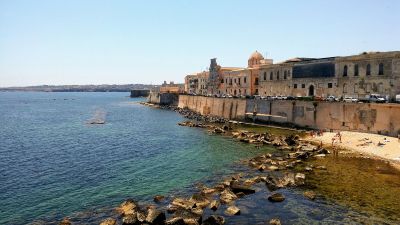
Ortygia, Sicily

How do you approach capturing the essence of Sicily in your video series?

We literally zigzag the island. We've covered the island up and down. There are very few must-see places in Sicily that I haven't been to. And we don't mind going back. 


Festivals are a very important part of Sicilian culture. Every town has its own patron saint, and it's a big deal. It's multi-generational; the kids, parents, and grandparents go together. I went to the Three Saints festival in Lawrence before I went to the festival in Trecastagni. The religious feel, the excitement, the fireworks… It's very different here. So we do that, of course.


There's a lot of food and cooking because you've got to have that. Then maybe there's an event we'll cover, like an art show or music. We'd like to be very diversified.


Inevitably, something, like a natural disaster in Etna, happens, and we cover it. Obviously, we were doing that during COVID.


We do a lot with the history. We're very fortunate to be aligned with a lot of professors from the University of Catania, and we've had [retired professor of Italian and Chairman of the Department of Modern Foreign Languages at St. John's University] Gaetano Cipolla on at least a half-dozen times. So, a lot of that, sharing the history and the culture, is really just providing what we think would be good information for the people.


For example, we published a video about the new Italian citizenship rules because Al does dual citizenship. There were 200 comments on it. Italian citizenship is trending on Google. So we're focused on that. We stay on top of these types of things.


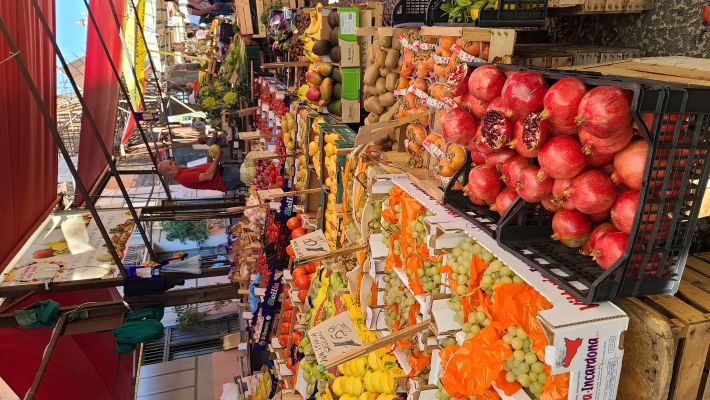
We take people to the markets and introduce them to the people, not just the produce. We feature the vineyards, and you meet the family behind the wine. We do that a lot. We feature a lot of family-run businesses. There's even a playlist. "Family-Run Businesses." That's very important. 
 

You--Me-and-Sicily---Taormina.jpg

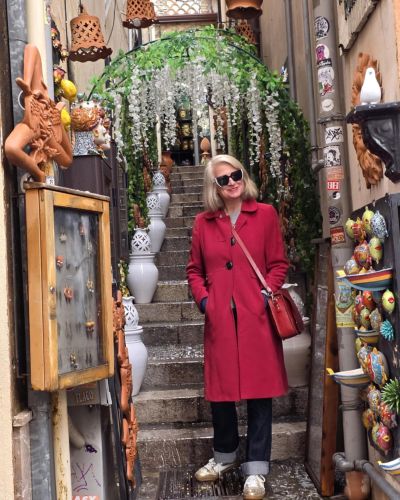
Eszter in Taormina


What makes your private and group tours unique?

What makes them unique is that we live here. You'll go to places we frequent. We take you to restaurants where the owners are our friends. The owners of the hotel you're staying in are our best friends. We've vetted the vineyards and have been going there for years and years.


We have made incredible connections. We have drivers and guides and hotels all over the island. We visit vineyards, do olive oil tastings, go to the Sicilian cart museum, and ride boats. We offer a basket of experiences.


For the private tours, I work one-on-one with the families multiple times to make sure that it's what the family wants. And 99.9% of the time when a family comes, it's because they want to come to Sicily and see an ancestral home. So those are some very special tours.


We keep our group tours very small, so they're very personalized and customized.  
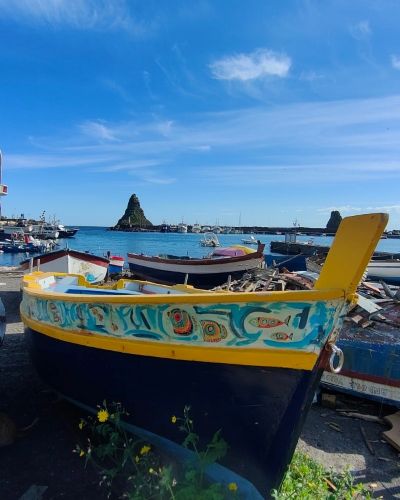
 

You--Me-and-Sicily---Acitrezza.jpg

A colorfully decorated boat in Aci Trezza


Tell us more about the Sicilian Project, which Alfred founded.

English as a second language is a huge problem in Sicily. Alfred wrote in one of his books (and I'm not quoting him exactly), "If someone gave me a donation, I would start some kind of an English-as-a-second-language language program that would be free for Sicilian kids." Someone who read that book called and said, "I'm going to send you a check."


This man, Steve Carbone, who is still a good friend of ours, sent Al a $10,000 check. And Al said, "Oh my God, I've got to do something." So he made it a 501(c)(3).


We've had very regular classes. We had one in Brolo, we had one in Bagheria outside of Palermo, and we have them in Canicattì, Aci Trezza, and Aci Catena. We hold these classes, and they run as sort of summer camps. We play (depending on the level of the kids), we sing songs, and have conversation.


When COVID hit and we had to cancel two classes, what we started doing was handing out money to the churches. So for about two years, we did that for Easter and Christmas. Some churches had more need than others. Then, we literally restarted the Sicilian Project.


I'm so thankful we're able to have classes now. We had four classes this past fall, and we started an adult class where Sicilian professionals who want to improve their English come and do that.


We just finished a class with 15 kids and six adults, and we were able to get guys from Naval Air Station Sigonella to volunteer because they have to do a number of hours of volunteering. So we had native speakers. I did class, and Alfred taught.


When I came here, I felt like Sicily was like a blanket. And then Sicily gave me so much beauty, food, and nourishment, emotionally and physically, that I was hellbent on being a very active member of the Sicilian Project. And not just being a board member, but actively giving back. We are very, very active. 
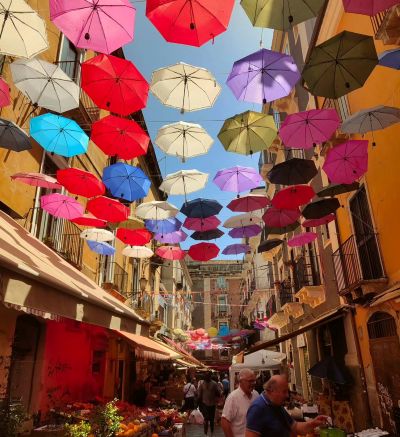
 

You--Me-and-Sicily---Downtown-Catania.jpg

A rainbow of umbrellas floats above a street in Catania.


What do you hope to share through your work?

First of all, we started the show to dispel stereotypes and myths about Sicilians and educate people about Sicily's deep and wide contribution—not just to Europe but to civilization.


Bringing people to their ancestral home is probably one of the most gratifying things. Hearing the oohs and ahhs of people on my tours when they're out seeing something beautiful or tasting something. When you are in Sicily, it is an experience for all the senses, right? You're emotionally overwhelmed by all the senses that are stimulated. So, that's what I hope my work does. I hope it inspires and educates more than anything.


If you enjoyed this article, consider subscribing to my newsletter for more content and updates!