icon caret-left icon caret-right instagram pinterest linkedin facebook x goodreads bluesky threads tiktok question-circle facebook circle twitter circle linkedin circle instagram circle goodreads circle pinterest circle

Conversazione

A Nonna's Recipe, a Community’s Heritage, and the Cookie That Connects Them

Teresa Freeman won first place in this year's Sons & Daughters of Italy, C. Colombo Lodge 1315 Cucidati Contest.

Rural poverty and food shortages drove millions of Southern Italians and Sicilians to the United States in the wake of Italy's unification. Among them were the Aiello brothers of Isola delle Femmine, Sicily, who, after landing in New Orleans, followed fishing opportunities to the West. They'd eventually settle in the town of Black Diamond, where the fertile Sacramento–San Joaquin River Delta supported what became a vibrant fishing industry. Friends and family followed the Aiellos to this land of plenty, eventually renaming it Pittsburg (minus the H) to reflect its steel-industry ambitions, like its East Coast namesake.

Flip through old directories at the Pittsburg Historical Museum (as I did while researching Beneath the Sicilian Stars, which is partly set in the fishing and steel town), and after pages of Aiellos, Cardinales, and DiMaggios, you'll land on nearly as many Ferrantes.


Teresa (Ferrante) Freeman's paternal great-grandparents were part of that Isola delle Femmine immigration wave. Today, she's proud to own a home downtown where her grandparents owned a store and raised her father.


This Millennial's deep Sicilian Pittsburger roots show in her commitment to celebrating and honoring traditions, particularly those forged in the kitchen. Teresa will never forget those moments shared with her nonna, baking cookies and sharing recipe secrets she intends to pass on. She started by inviting friends and family over to teach them her grandmother's techniques, especially for her favorite cookies, cuccidati (also spelled cucidati).


Celebrated across Sicily, this classic cookie varies in name, appearance, and ingredients by region. The cuccidato (or buccellato, zucciddato, nucciddato, urciddato, or purciddato) in its simplest form serves as Sicily's well-dressed version of the fig newton. But simple is relative, considering how labor-intensive the preparation is—chopping dried fruits and nuts, zesting citrus, and spooning just the right amount between layers of shortbread dough before the whole thing is rolled and either sliced into tubes or shaped into something that resembles a bracelet. That, after you've soaked the fruits for days or even months in your favorite booze, and before you frost or ice and decorate with rainbow Jimmies, nonpareils, or confetti sprinkles.


Take a bite, and you'll discover a cookie unlike any other, one that reflects the diverse history of Italy's largest island, particularly the inclusion of figs (introduced to Sicily by the Phoenicians and Greeks) and sugar, citrus, and candied fruit (brought by the Arabs).


When Teresa received an invitation to participate in the Sons & Daughters of Italy, C. Colombo Lodge 1315 Cucidati Contest, she was prepared to share her grandmother's special recipe with hundreds of attendees. She didn't expect to win first place.


Teresa reflected on her fond memories of these Sicilian cookies, the personal reward she found in mastering her grandmother's recipe, the not-so-secret ingredients, and why everyone should try baking cuccidati.


How does making cuccidati remind you of your grandmother?

I remember as kids, she'd have us come, and we'd frost them together, doing the parts that kids love to do.


That's definitely where a lot of my love for cooking and baking started, with my grandparents—just watching them pour their passion into something that was a cultural tradition and knowing how important that was.


I think just seeing how much it brought joy to others in our family who maybe weren't making them or just enjoyed eating them—it gave me that feeling of, "Wow, I really want to be part of this. I want to have that feeling of being able to share a gift like that with others."


What part of making cuccidati do you find enjoyable, and what's most challenging?

I think the enjoyable part for me was really getting to kind of master my own version of this recipe. It's very different. Everyone makes their own versions of this cookie, and that's the point of having the contest. Everyone has their own way of putting it together. Getting to make the recipe my own, based on those traditions, on what I know we like, and on what I find important, was an enjoyable and personally rewarding part of it.


I would say the filling is my favorite part, because every time I make it, it reminds me so much of my grandmother and all the little secrets and tips she used to have and put in. It just makes me smile thinking about her and the different memories of my family over the years. And it's definitely the most rewarding part of continuing to make them year over year.


Then, the most challenging part is that it is just a grueling process. There are so many steps, and there is only so much time. I wish I could spend all my time making cookies just like my grandmother did in the latter part of her life. It's a labor of love, for sure!


Why does your grandmother's recipe stand out from others you've tried?

There are definitely a few key differences in my recipe. It's about the right ratio of dates to figs, and then making sure to use plenty of brandy. That was always Nonna's trick. Don't be shy with the brandy!


I've learned, too, as I'm making my recipe for the texture of the dough, the cookie part of it, that I like to use a lot of baking powder in mine because it gives a nice, airy, fluffy cookie. And then lastly, putting a little bit of anise in the frosting, that's another tip from my grandmother. It adds this extra complexity that I really enjoy.


What feedback did you receive from the judges?

They really enjoyed the texture and the different flavor profile.


What's your preferred technique?

I roll out a long strip of the cookie dough, use a spoon like my grandmother did to make a line of filling, and then roll it over, cut them into the right shape, and then bake them.


I know some others roll and bake them before cutting, which is smart too. It saves a little time. 


Why is the cuccidato the star of the cookie trays?

It's so unique. You just don't see any other cookie quite like this. And the fact that it is so unique means that it's something we can really latch onto culturally.


I remember my grandmother making her chocolate balls and her snowballs, but cuccidati really stand out as a unique recipe within our culture. They just look so festive, too, with the sprinkles and the frosting. They invoke that feeling of Christmas.


What does it mean to observe these traditions of prior generations?

It really connects me to my heritage and my ancestors. It's why it's so important to me to learn some of these cultural recipes: sometimes you feel that if you don't know them, if you don't pass on these traditions and memories, they'll fade away.


It's definitely an honor to participate in a cultural tradition and carry it on, and to be part of the events the Sons & Daughters of Italy and other groups hold to keep these traditions alive so that people can connect with their heritage. 


I promote that with my own cousins and other family members. I hosted a gathering to share my recipe and do some cookie baking together, because I cannot be the only one who thinks all of this is important and really wants to carry it forward. So I was blessed to have my cousins join me for that process.


I wasn't sure when I started planning that get-together whether I'd have a lot of people interested in joining me and taking on all of it. And to my surprise, basically everyone came. So it definitely is interesting to our generation. People do care about their heritage. They do want to know more and be part of the family and tradition.


Looking for more Italian cookie inspiration? Check out these other blog features.

How Friends of Isola delle Femmine Creates a Lasting Bond Between California and Sicily

Frank Bruno grew up in Pittsburg, California, hearing his grandmother's memories of Isola delle Femmine, a fishing village outside Palermo, Sicily. But he knew very little about the place and didn't think much about it. That was until 1992, when his friend, Vince DiMaggio, shared that he'd returned from his godparents' wedding vow renewal in the same town. Vince had spoken with Isola delle Femmine's then-Mayor Vincenzo DiMaggio about possibly having a Sister City relationship with Pittsburg.


Frank and Vince weren't alone in their ties to Isola delle Femmine; most of Pittsburg's Italian American population shared that connection. As President of the Pittsburg Chamber of Commerce, Frank was in a good position to take action. He asked Pittsburg's mayor, who agreed to the proposal, and then he reached out to officials in Sicily.


When Isola delle Femmine's mayor came to Pittsburg, he saw its iconic fisherman statue, sculpted by local artist Frank Vitale, whose grandparents came from Isola delle Femmine. He wanted one for his town, so Pittsburg community members raised funds to make it happen.


The sculptor still had the mold he used to build a replica that the Americans sent to Sicily. Today, you can find that statue at Isola delle Femmine's Piazza di Pittsburg, named for the town's original sister city.


That would have been the end of the story: a lasting connection made in honor of shared heritage. Frank moved to Novato, California, in 1997 and lost track of many of the people who were involved until 2017, the 25th anniversary of the Isola delle Femmine-Pittsburg delegation's first visit.


Frank and Vince returned to the fold, and a group from Isola delle Femmine joined the community for a reception. Two years later, Frank, Vince, and Vice President Mary Coniglio co-founded Friends of Isola delle Femmine with a mission statement to preserve, protect, and promote Sicilian-American heritage within Isola delle Femmine's California sister cities, which today number three after the 2017 and 2019 respective additions of Monterey and Martinez.


Frank, who serves as Friends of Isola delle Femmine's President, shared more about how and why Isolani emigrated to the U.S. and first landed in Pittsburg. We also discussed the organization's events, outreach, and evolution, as well as its challenges for the future.
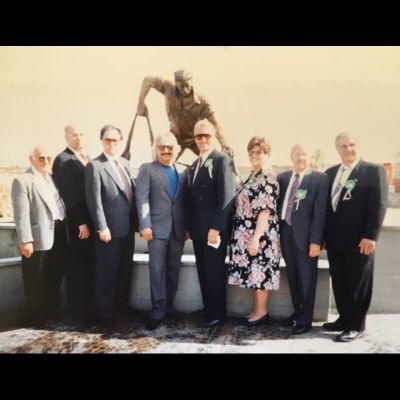

Friends-of-Isola-delle-Femmine-1994-trip---Sal-Caccaroni--John-Buffo--Vince-DiMaggio--Sculptor-Frank-Vitale--Frank-Bruno--Mary-Coniglio--Rocco-Battaglia--Vince-Coniglio.jpg

Friends of Isola delle Femmine 1994 trip - Sal Caccaroni, John Buffo, Vince DiMaggio, Sculptor Frank Vitale, Frank Bruno, Mary Coniglio, Rocco Battaglia, and Vince Coniglio


How and why did Isola delle Femmine residents find their way to Pittsburg?

Back in the 1860s, when Garibaldi unified Italy, it did little to help the people in Sicily. They were still starving, and there was no work. One story was that they were so hungry they resorted to eating wheat plaster from the walls.


In 1862, two brothers from Isola delle Femmine with the last name Aiello came to New Orleans, where a big influx of Sicilians lived in the French Quarter.


They were trying to make a living fishing and cooking. After a Yellow Fever outbreak, they left Louisiana for Oregon, where they fished for salmon before seeing an advertisement from California. The state was looking for fishermen to come and help fish the delta to feed the people who came in for the Gold Rush. So the Aiellos got on a train and ended up in what is now called Pittsburg, California, on the Sacramento River. They started fishing and called for their family, saying, "Here in Pittsburg, the weather is like home. The fishing is abundant, and we're making money."


A lot of people started to come, and many of them worked and stayed here. Then, a lot of them went back home. Pittsburg was the fishing area, but there was seasonal fishing. So when the seasonal fishing went to the wayside, they went to Martinez and Monterey, and many of them stayed there while others went back to Pittsburg. So that was the influx, which is why we have three Sister Cities with Isola in our organization.


Describe your cultural exchange and promotion efforts.

Back in 1994, we started a student exchange program. We only did it twice. We sent high schoolers back there, and they went to school. Isola delle Feminine sent college students here, which became a vacation for them. And I said that's not what we really wanted to do as a student exchange program.


My idea, and we're trying to start this now, is to have something similar to what I'm involved in with the Rotary Club: a group study exchange. There would be dentists or any occupation that is here that wants to go. We would supplement, coordinate their stay over there, and have a little bit of money to help them there. But they would pay for their trip. They would go over to Isola and the Palermo area and vice versa.


We can do it with contractors, dentists, doctors, and many professional business people who would come back and forth. As for the cultural heritage stuff, we're working on doing what I call an ancestral fair, having an area where folk music and heritage stuff are going on, and then having booths. 


How have you connected with younger generations?

We're giving scholarships to our members' children, grandchildren, and great-grandchildren who are going to college. We give out six; two years ago, we gave out 10. They would have to qualify normally by having a grade point average acceptable for college and writing a statement about what it was like growing up Italian. Then we have a picnic and give out our scholarships.


One of our roadblocks is passing on our cultural heritage to the younger generations. It's very difficult. They're proud to be Italian American, but that's where it ends. Now, all of us old-timers look at this as memories. Growing up in Pittsburg was one of the greatest childhoods anybody could have. I mean, it was just full of family everywhere.


We have functions, but not many younger people have come. Instead of trying to decide how to capture the younger generation and have them tell us what they're looking for, we're going to have a discussion and invite a number of our younger members who are 40 or 50 years old to ask them.


If we're going to succeed as a cultural heritage organization, we need to replace these people. I can't do this forever.
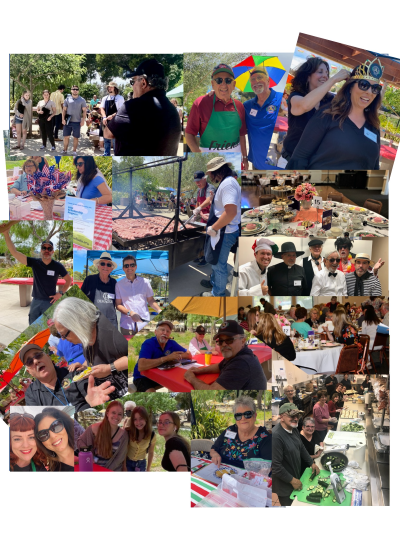
Friends-of-Isola-delle-Femmine-picnic.png

Scenes from Friends of Isola delle Femmine picnics


Tell us about your events.

We've had some fundraisers to fund administration, scholarships, and anything else we want to do. We've done pretty well. 


We started with a program back in 2019 called That's Italian. We had some opera singers, and we sang show tunes at a place called the Colombo Club in Oakland. About 565 people could sit down for dinner, and then upstairs, there is a banquet hall, bar, and stage. We had 200 people, and they went downstairs and had a nice Italian dinner. And then they came up, and we had this big show and a live auction.


After the pandemic, when the British Queen passed away, one of our members said, "Why don't we have a High Tea but Italian style?" We had one in Monterey and one in Pittsburg. We're finishing up our third one, which will be the last, and we're going in another direction.


Our summer picnic was designed to be something we used to do as kids and families. Here in Northern California, we have Mount Diablo, where we had Camp Curry and Marsh Creek, and we could swim and play baseball as a family. We wanted to do something similar and said, "Why don't we just give our scholarships out then?"


We are getting about 250 people, and we can showcase what we do and get new members out of that. We have an Italian who lives in Martinez and owns a catering company. He comes and does the pasta and salads, and then we cook sausage. The mayor of Martinez and the city council people come out, and they do the serving. 


What do you ultimately want to share with your community?

There are Italians and Sicilians from Isola here in Pittsburg, California, but not many. They've branched out to the other areas. What I want to accomplish for the community is to bring back our pride and heritage and continue to have that. We all want to remember what our nonnas and nonnos did for us when we were growing up. We're trying to put together a cookbook per se with all these recipes in our newsletter. But we want to do more cultural stuff to remember our grandparents and great-grandparents; hopefully, the next generation will be appreciative.
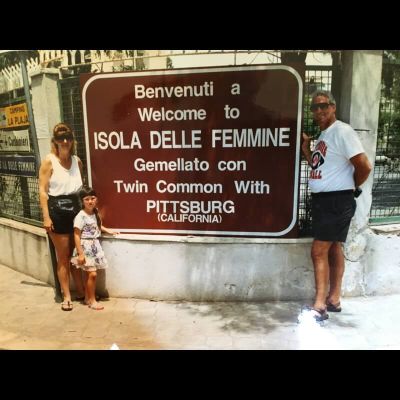
 

Frank-Bruno-and-family-unveiling-of-the-Fisherman-Statue-and-sister-city-in-1994.jpg

Frank Bruno with family at the celebration and unveiling of the Fisherman Statue and sister city in 1994


If you enjoyed this article, consider subscribing to my newsletter for more content and updates!