Los Angeles-based Italian American Lauren LoGrasso has quite the juggling act as a singer, songwriter, podcaster, producer, public speaker, and creative coach. Her key to keeping all the balls in the air? Scheduling.
"It's easy to let our creativity pass us by if we just treat it like a thing that will show up whenever we want it to," Lauren says. "We have to prioritize it the same way we prioritize our relationships—especially when nobody's asking you for it—when it's all self-driven."
Driven is the keyword for this "multi-passionate" creative. In the past year alone, she won not one but two Webby Awards for her podcast, Unleash Your Inner Creative, released a single, and helped others realize their creative potential through coaching. 2025 also promises to be a big year, with several exciting projects on the horizon.
We recently had a chance to sit down and discuss our shared Sicilian heritage, where she gets her creative inspiration, what it means to have an award-winning podcast, her favorite interview moment, future plans, and her overall goal.
Tell us about your connection to Sicily.
I am 75% Sicilian. My mom is half Sicilian and half northern Italian, and my dad is 100% Sicilian. I grew up feeling very connected to it. We were over at my grandparents' house for Sunday dinners. They had a huge part in raising me because my parents worked, so they took care of me a lot.
I had a pretty classic Italian-American upbringing. I was very close to my cousins. I'm an only child, so my cousins were more like my siblings. My heritage is something I have always been really proud of, but as so often happens with our culture, in particular, it gets watered down.
Our people really wanted to assimilate and threw a lot of their customs away. And so I feel like my role in my twenties and thirties has been about reclaiming and retracing some of the steps and figuring out some of the things we lost or gave away because we wanted to fit in.
Part of that was being the first person in my family to go back to the towns where my family was from. Two weeks before I was going to Sicily for the first time, my dad handed me a letter that his first cousin Nicola had written to him back in 2009. He just never answered it for some reason but held onto it. I asked, "Do you want me to do anything?" He's like, "Just go to this address." So my boyfriend at the time, now my fiancé, and I went to Marsala.
We were like, "We have to go to this address just in case they're somehow still living there from 2009." It was back in 2022 that we went, and we took this little cab, and we showed up at their apartment door, and it still said LoGrasso on it. So I was freaking out. I started violently pressing the buzzer, and I was panicking in that split second because we didn't have a phone number for them.
All of a sudden, these two guys come out on the balcony on the second floor. They look down at me, and I say, "Hello, my name is Lauren LoGrasso. I think I'm your cousin." And they look at each other, they look at me, and they go, "One moment," and they rush down the stairs.
I pulled up the picture of the letter I had on my phone. It was from them. We were hugging and crying. They let us up to their apartment. They had this thing that said "Foto America" on it, and it wasn't like it was buried in a bin. It had pictures of all of us—their American cousins. It was right next to their kitchen table. And through that, I ended up getting to meet them: Nicola, my dad's first cousin; his wife, Maria; their son, Alessandro; another cousin of ours, Salvatore; and his wife, Rosa. And it was just one of the most beautiful experiences of my life, and they had been waiting for us all of that time.
It still brings me to tears now, but Salvatore wrote in Google Translate, "This moment has been awaited for 70 years."
I've always been very connected to my Sicilian heritage, especially over the past two years, as I've gotten to know them and built our relationship. I was able to bring my parents back to meet them for the first time. I feel very connected now. I'm learning Italian, and it's been like a reclaiming. It felt like a puzzle piece that had always been missing in me was put back into place.
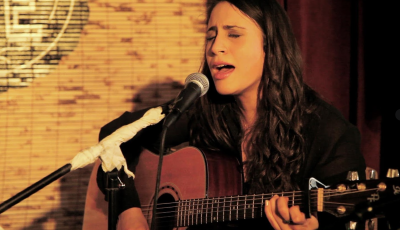
Lauren has been singing since she was a little girl.
What inspired you to pursue such a range of creative outlets?
I always loved singing. That was probably one of the first things I did from the time I was little. My mom got me a karaoke machine when I was two and a half. When I was three, I started doing musical theater, and then at the end of high school, I was like, "Well, I should probably do something more practical. So I'm going to go into broadcast journalism because I want to be a talk show host."
I had no desire to actually be a real journalist following a story, so I ended up dropping the journalism thing. It really wasn't for me. And I got a BFA in acting and a BA in communication.
I originally came to Los Angeles just to act, and I discovered music kind of accidentally. I had always done musical theater, but I didn't write music until I came here.
When acting started really breaking my heart because of all the rejection, I discovered this ability and passion for songwriting. I linked up with this guy I knew from Michigan State, and we started playing all around town.
When I was on my way to these gigs, I would listen to SiriusXM radio. I'd done radio in college, but just DJing. But that's when I really fell in love with the medium of talk radio.
So I just got this obsession with it, and I was like, "I'm going to work at SiriusXM someday." I didn't know anyone who worked there. I really only had this college experience of radio. But, long story short, I ended up working there. That got me into hosting and producing, and then I transitioned into podcasting.
Public speaking is something that I have wanted to do since I was in middle school or high school. But this whole time, I've kind of felt like I need to wait until I actually have something to publicly speak on. So, I knew that I needed to build experience. Being in L.A. and pursuing the arts in any way definitely gives you the chops, pain, and resilience to speak from. So now I speak about the topics that I've kind of discovered through my journey here and on my podcast, which are related to creativity and self-development.
Coaching was a natural thing that I started doing because people were asking me for my advice all the time, and I found myself getting burnt out by doing it constantly for free. So finally, I was just like, "I guess I should just make this part of my job. People seem to want it, and I do love giving people advice." So it's really nice when they solicit it because I'm trying to work on not giving unsolicited advice!
Unleash Your Inner Creative airs on podcast platforms.
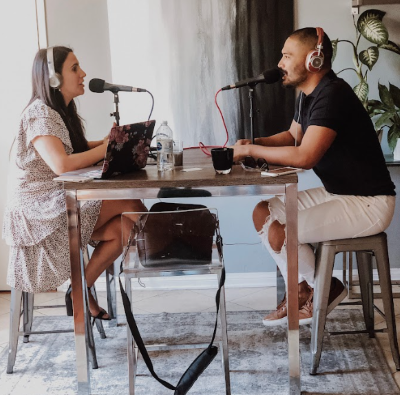
Tell us what motivated you to launch your podcast, Unleash Your Inner Creative.
There were a couple of things. Number one, I really believe, and now I have proof via a NASA study that we are all born creative, but that life knocks it out of us. And so I wanted to help people remember, reclaim, and unleash it. Because I saw a lot of people, whether it was people in L.A. who came out here with a big dream and, just as things got disappointing, pushed it further and further down, or people in my family who I could tell just never even let themselves turn that creativity on.
I started to notice a level of depression or even numbing out in them. I really believe that repressed creativity causes a lot of personal suffering, and I don't want to see that happen anymore.
I was also producing a podcast, and this guy on it said, "In 50 years, 85% of all jobs will require creativity; it's the one thing AI can't do on its own. It can replicate human creativity, but it cannot be creative."
So there was this more spiritual self-development reason that I believe repressed creativity causes suffering and a practical reason that being creative is the one thing in the world that will always make you financially viable. There is nothing more powerful than a good idea.
The show aims to give people tools to love, trust, and know themselves enough to claim their right to creativity and pursue whatever it is that's on their heart. It sits at the intersection of self-development, mental health, spirituality, and creativity/the creative process.
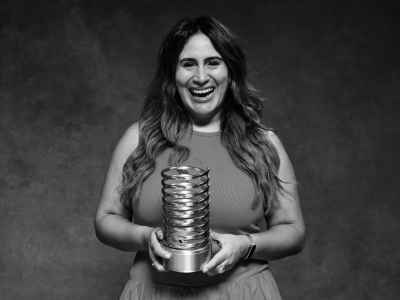
Lauren proudly holds one of two Webby Awards she won in 2024.
You've won Webby Awards. What does that mean to you personally and professionally?
It was wild because I had applied for the web awards several times before I was even nominated, and I was nominated and won for the first time last year. The year before that, I was an honoree. But what it meant to me was that almost six years ago, I was right to take a chance on myself.
There was a company I was supposed to work with at the time who was going to produce my show. They ended up pulling out at the last minute, and I decided to still go forward and produce it independently. And it was just a signal to me that, "Wow, I was right to take a chance on myself. This is resonating."
Also, it meant a lot to me personally because of how my community supported me. Unfortunately, many times in life, we have to wait for something bad to happen to find out how much people support us and love us. My community, listeners, friends, and family showed up for me so beautifully, and because of that, I was able to see how much people wanted to see me shine and felt like they were part of my success.
I wish that for every person because I think we should all have that opportunity and privilege to get to know how much people want to see us succeed.
I think it's easy to feel like the underdog and feel like, "Oh, nobody sees me." But when something like this comes up, and people actually show up for you, that, to me, was the greatest win.
Once we got to the awards, I looked at the program, and there were all these huge companies like Vox Media, PBS, MSNBC, and then Lauren LoGrasso Productions. It was like, "Hell yeah!"
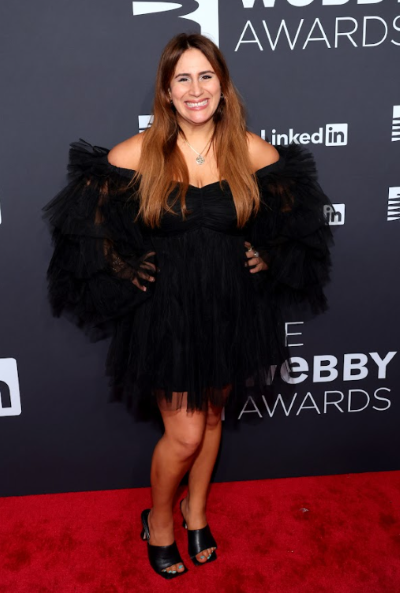
Lauren poses on the red carpet at the Webby Awards.
You've interviewed multiple notable personalities. Can you share a memorable moment from one of those interviews?
They've all been memorable in different ways. There's this one that really stands out to me: Julia Cameron. I've gotten to interview her every year for the past four years. The first time I got to interview her was mind-blowing because there would be no Unleash Your Inner Creative without Julia Cameron. She was the first person in our general time period who actually said, "Everyone's an artist. There are ways to unleash these qualities within us. Here are some tools."
Her book and the "Morning Pages" changed my life so dramatically. So, the whole first time interviewing her was really beautiful, but at the end, she sang, and it felt like I got to see her younger self come out.
It's interesting because when you're in a supportive role, whether you're a coach, a teacher, or even a self-development writer, I think people often don't see you as your own creative being and artist. They just see you as the teacher.
When she sang the song at the end, I got to see her younger self and true artist come out. And that was really special.
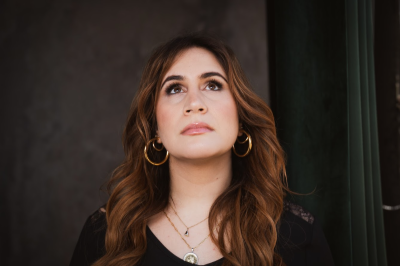
"...your worth doesn't hang on whether or not the ambition ever comes to fruition."
What advice do you have for someone who's just starting out?
The thing I wish I had, looking back on it when I was starting, and even now, I need to work on it every day, is taking my worth out of outcomes. It's really easy to confuse creativity with how something is received, and your creativity and artistry have nothing to do with how far your work goes.
You are an artist, or you are a creative, regardless of whether or not you ever become mainstream or anything close to it. And I think starting out, knowing that you are worthy, the chances of you being born are literally—this isn't a random statistic— one in 40 billion.
So, just the fact that any of us are here is a miracle. And as much as we can, taking our worth out of outcomes and knowing that the pursuit of doing it, just doing it, just putting it out is the whole exercise.
You can still be ambitious, but know that your worth doesn't hang on whether or not the ambition ever comes to fruition. That and self-knowledge, I really do believe, are the keys to pretty much everything in life. But you definitely deserve to unleash your creativity and share it with the world. It's much more holistic than we give it credit for. The inner work is really important, and you should also enjoy life.
When I first moved to L.A., I was so obsessed with making my dreams come true that I didn't let myself be a person. And if you don't let yourself just be out in the world and enjoy human things, you have nothing to create from. So I would say make time for joy, make time for rest, and make time to remember who you are outside of what you do.
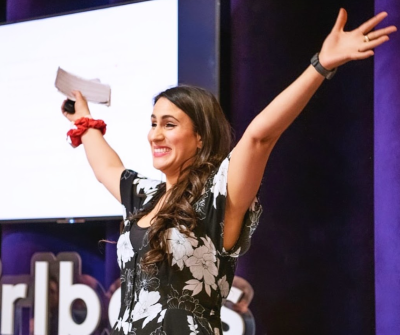
Lauren has spoken publicly at events, including the Girlboss Rally.
What future projects or goals do you have in mind for your career, and what can we look forward to?
I've been doing more and more public speaking over the last year, but I'm going to be going really hard with that in 2025. For public speaking, I just finished my reel and my speaker's deck. I'm launching a new website, so you can expect to see me out in the world speaking a lot more. And I'm incorporating music into my speaking, which is really cool. I've been trying to find a way to bring all my creative children under one roof for a while. So that will be coming.
I've got a few new singles. One is about the personal shadow and integrating it so you're a whole person. Another is about my struggles with codependency and healing from that. And I've got some other ones about family generational trauma and stuff.
I've been working on a children's YouTube show with a friend for a long time, so I'm hoping that will come out. We're very close to the end, but just a few more things to tie up and hopefully work with great new creatives and people doing podcasts.
I love helping people find their voice and bring that into the world. That's definitely one of my passions. And so yeah, hopefully, meeting new people to work with and support them in their creative journeys, too.
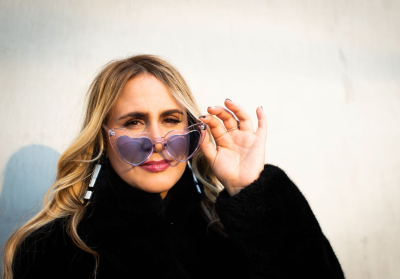
Lauren says the key is being yourself.
What is your goal with all of your creative pursuits?
The first thing that came to mind was just to be myself. I think a lot of us have a dream to make our living being ourselves in some way, whatever that means to us. And yeah, I want to use my voice to help other people feel empowered to find and use their voice or whatever their creative outlet is. So, the goal with all of it is to be able to feel fully expressed and not feel like I left anything on the table when I leave this world.
If you enjoyed this article, consider subscribing to my newsletter for more content and updates!